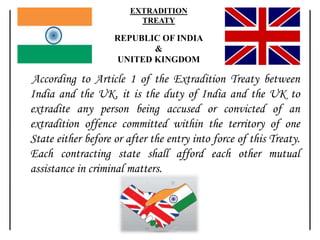
Extradition Treaty Between India: A Comprehensive Overview
The extradition treaty between India and UAE serves as a significant legal framework for fostering judicial cooperation between nations. Such treaties are paramount in the fight against transnational crime, facilitating the return of fugitives to their home country for prosecution or the serving of their sentences. The extradition process is often complex and involves various legal, diplomatic, and law enforcement channels. This article delves into the intricacies of extradition treaties involving India, shedding light on their importance, challenges, and the evolving landscape of international law.
The Significance of Extradition Treaties
Extradition treaties are essential for maintaining law and order on an international scale. They allow countries to collaboratively address crimes that occur across borders. The significance of these treaties for India cannot be understated, as they contribute to the country’s commitment to combating crime and terrorism. Moreover, they help establish India’s credibility in the eyes of the international community, reinforcing its adherence to international law.
Key Components of an Extradition Treaty
An extradition treaty typically includes several key components:

- Definition of Extraditable Offenses: The treaty outlines which crimes are considered extraditable; this might include serious offenses like murder, drug trafficking, and financial fraud.
- Dual Criminality Principle: For extradition to occur, the act in question must be a crime in both countries.
- Exclusions: Certain offenses may be excluded from extradition, such as political crimes or military offenses.
- Procedures: The treaty defines the legal framework and processes to be followed for requesting and granting extradition.
- Human Rights Considerations: Provisions that ensure the extradited individual’s human rights are respected are increasingly becoming standard in treaties.
Extradition Treaty Between India and Various Countries
India has established extradition treaties with several nations, including the USA, UK, Canada, and various countries in the European Union. The upcoming extradition treaty between India and UAE highlights India’s efforts to strengthen its legal frameworks to tackle organized crime and terrorism.
Procedures Involved in Extradition
The extradition process typically involves the following steps:
- Request for Extradition: A formal request is made by one country (the requesting state) to another (the requested state) for the surrender of an individual.
- Review of Request: The requested state evaluates whether the request satisfies the conditions set forth in the treaty.
- Judicial Review: The case may undergo judicial review in the requested state to determine the legality of the extradition.
- Decision: The relevant authorities decide whether to grant or deny the extradition request.
Challenges in Extradition Processes
Despite the existence of treaties, several challenges can arise during the extradition process:
- Legal Complexities: Differences in legal systems and definitions of offenses can complicate extradition requests.
- Political Considerations: Geopolitical relations between countries may influence the decision to extradite.
- Human Rights Concerns: The requesting state’s human rights record can be a significant factor in extradition cases.
Recent Developments and Future Perspectives
In recent years, there has been a significant increase in the number of extradition requests processed by India, especially related to economic and cyber crimes. The importance of international cooperation in law enforcement continues to grow as crimes increasingly transcend international borders. The evolving nature of global crime necessitates adaptable legal frameworks, which is why nations are continuously negotiating and revising their treaties.
Conclusion
The extradition treaty between India and various nations, including the anticipated treaty with the UAE, marks a pivotal development in international law. These treaties facilitate the process of bringing fugitives to justice and demonstrate a collective commitment to combating crime across borders. As global crime evolves, so too must the legal frameworks that govern international cooperation, ensuring that justice can be served efficiently and humanely.